

Frequently Asked Questions
-
How do I know that what I’m buying is organic?
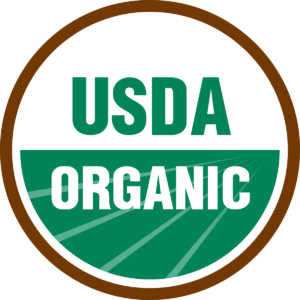 In the grocery store, look for the USDA Certified Organic seal. All products bearing that emblem have been certified by the USDA as compliant with National Organic Program standards. “100% Organic” means that the product was made with 100% certified organic ingredients and processing aids. Like all organic foods, it will contain no GMOs. Simply “Organic” accompanied by the USDA seal means that the product was made with at least 95% certified organic ingredients.
If the item says “organic” but doesn’t have the USDA seal, only a portion of the ingredients are organic, and the manufacturer is required to denote which ones on the label.
There is no regulation around use of the terms “natural” or “all natural,” and the terms mean little—products labeled as such can be made using non-organic methods and can contain GMOs.
If you buy produce at the farmer’s market, the best way to determine how the food was grown is to talk to the farmer. Not all small producers are eligible or able to attain USDA certification, but they may still farm using organic methods.
-
I’ve heard organic won’t be able to feed the growing population.
Evidence from nearly 40 years of research through the Farming Systems Trial says otherwise. Our findings have determined that yields of organic grain crops—which make up a bulk of global food production—are competitive with conventional yields after a transition period, and organic yields outperform conventional in times of drought by up to 40%.
The truth is that our climate is increasingly unsteady, and we will see an uptick in both extremes and variances in temperature and rainfall around the world in coming years. To truly feed a growing population, we need strong, resilient agricultural systems that can withstand change and still produce nutritious, abundant food. That’s why the future is organic.
-
I’ve heard that organic uses more land and is worse for the environment.
Conventional farmers grow monocultures—vast plantings of a single crop, like corn or soybeans—season after season, positing that such operations are the most efficient use of land. However, these monocultures require high levels of synthetic fertilizers to continue producing high yields, and they deplete soil and greatly reduce biodiversity, harming ecosystems overall. Conventional methods contribute to water pollution, greenhouse gas emissions, and may be linked to a decline in the nutrition of our food.
Organic farmers grow many kinds of crops, encouraging biodiversity and the complex relationships between species that can improve the health of both soil and plants. Our long-term Farming Systems Trial, which compares conventional and organic systems side-by-side, has found that organic systems use 45% less energy, release 40% fewer carbon emissions, and improve the health and quantity of soil over time.
-
What are GMOs?
GMOs, or Genetically Modified Organisms, are living things that have had their genetic code altered. Typically, a package of genes is taken from an unrelated organism and inserted into the GMO to create a desired trait, like herbicide resistance. A GMO that is resistant to herbicide will survive when sprayed while nearby weeds die. GMOs exist for many reasons and in many forms; for the purposes of this discussion, we use GMO to indicate a crop that has been modified to tolerate chemical herbicide, like the crops produced by Monsanto (now Bayer).
The problem is that these GMOs haven’t lived up to their promise and have facilitated poor agricultural practices, like monocropping and intense use of toxic chemicals. Nature adapts. Chemicals that were once sufficient to kill weeds becomes less effective as weed pressure changes, requiring more intense application to achieve the same result—and many of those chemicals end up in our air and waterways. Since introducing GMOs, we are using more herbicides than ever before, not less.
Perhaps more importantly, the rise of these GMOs has created a vertically integrated system owned by the chemical company. Farmers become mere implementers of someone else’s design, obligated to pay a licensing fee on every bag of seed, and vulnerable to prosecution. GMO crops may simplify food production, requiring fewer people to manage more acres, but the short term gain comes at cultural and spiritual costs. The fracturing of rural communities in which younger generations see no future is a direct consequence of this type of industrial agriculture.
GMO cropping is ultimately short-sighted and reductionist, putting power in the hands of a few. Regenerative organic agriculture instead encourages an expansionist method that puts power in the hands of as many farmers as possible.
-
Don’t organic farmers use even more toxic chemicals?
Organic farmers should do everything possible to reduce or eliminate the need for chemical intervention, creating farm systems that are naturally strong and robust to minimize occurrences of pests, diseases, and weeds.
However, there are times when organic farmers require additional tools. The National Organic Standards Board maintains a list of organic-approved substances—including pesticides, herbicides, and livestock dewormers or supplements—that organic farmers can use. These substances are naturally derived and quickly degrade by weather, or else they are easily broken down by microbes in the environment, lowering the chance of human exposure.
Chemical pesticide formulations are manipulated in laboratories and persist for longer periods of time in the environment. They are foreign to the human body, which might see the compounds as intruders. Conventional farmers aim to minimize chemical residues that end up on foods, but “approved safe levels” aren’t static and don’t account for multiple chemicals that can be found on or in a single pesticide or herbicide product. What is considered safe now could change as we learn more about the unique interactions between food and human health.
For a complete list of organic-approved substances, click here.
-
Why does organic cost more?
- Demand outstrips supply. Organic product sales have climbed by over 70% since 2008, yet only 1% of domestic arable acreage is currently certified organic.
- Organic farming is more labor-intensive and organic feed is more expensive.
- Government subsidies for conventional farmers reduce the overall cost of those crops. Equal subsidization is not available to organic farmers.
- While customers may pay more upfront for an organic product, society pays, both literally and metaphorically, in turn for conventional agriculture’s unintended consequences including eroded soils, polluted water, and a farmer suicide crisis.
- Organic is still new and approaching economies of scale.
-
What is the “Dirty Dozen”?
Each year, the Environmental Working Group releases a consumer guide to the kinds of produce with the most amount of residual pesticides. You can download it here. If you can’t afford to buy only organic, prioritize it when buying these kinds of produce.
-
Is organic more nutritious?
To date, no studies have explicitly compared the nutrient density of organic and conventional crops grown under controlled conditions. Our Vegetable Systems Trial is the first. Since the most reliable data is that taken over many years, we intend to run the VST for at least 20, and we hope to have data to share in the next few.
What we do know is that over the past 70 years, there’s been a decline in the nutritional value of our foods. During this time, industrial and conventional agriculture increased yields and the size of crops, but the tradeoff was a decline in nutrient content, known as the ‘dilution effect’. We know that organic methods improve soil and that improved soil leads to healthier plants—we believe both make for healthier people. We also know that organic foods have less pesticide residues.